

In the high-stakes environment of healthcare, the design of personal protective equipment (PPE) like surgical gowns and isolation apparel has always been a balancing act. For years, manufacturers and end-users faced a difficult trade-off: you could have a fabric that offers impenetrable protection but feels like wearing a plastic bag, or you could have a breathable fabric that risks fluid strike-through.
With the evolution of medical nonwovens, specifically adhesive-laminated composites, this paradox is finally being resolved.
Having analyzed the latest trends in medical textile engineering, I want to share why adhesive-bonded nonwoven fabrics are becoming the gold standard for surgical and isolation applications, particularly when facing the toughest clinical demands.
The Core Advantage: Engineered Synergy
Unlike traditional SMS (Spunbond-Meltblown-Spunbond) fabrics or simple calendered composites, adhesive-laminated nonwovens allow manufacturers to create a "team" of materials where each layer performs a distinct function without compromise .
By using advanced hot-melt adhesives (often applied in microdot patterns or sprayed coatings), we can bond a strong outer layer to a functional inner layer—such as a breathable microporous film or an absorbent comfort layer—without blocking the pores of the materials . This is the foundation of its superiority.
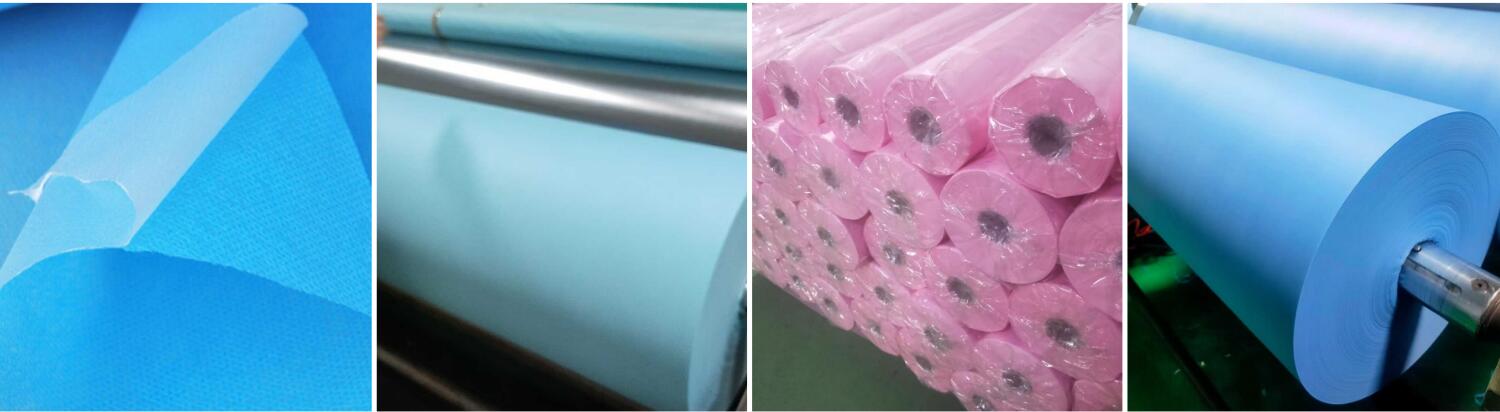
How Laminated Nonwovens Solve Critical PPE Challenges
Here are three specific "pain points" in surgical gown and isolation apparel design where adhesive-laminated nonwovens are making a decisive impact:
1. The Challenge: Balancing "Strike-Through" Resistance with Staff Comfort
The Problem: Surgeons and medical staff in high-fluid environments need protection from blood and viruses (strike-through resistance). However, impermeable films trap body heat, leading to heat stress and fatigue during long procedures.
The Laminated Advantage: By laminating a shell nonwoven to a microporous film using a microdot adhesive pattern, we achieve a high level of barrier protection. Crucially, this method preserves the film"s "breathability" (MVTR - Moisture Vapor Transmission Rate). The adhesive dots leave the film"s microscopic pores unsealed, allowing sweat vapor to escape while blocking liquid penetration . This keeps the clinician cooler and drier without sacrificing safety.
2. The Challenge: "Zipper Effect" and Freedom of Movement
The Problem: Traditional laminates or coated fabrics can be stiff. When a clinician raises their arms, the fabric restricts movement or creates a "zipper effect" (the fabric pulling tight across the back). This also leads to high stress on seam areas, where tears often begin.
The Laminated Advantage: Adhesive lamination allows for the use of elastic or highly conformable nonwoven components . By bonding a stretchable nonwoven (like those using polyurethane or elastic blends) to a barrier layer with a flexible adhesive, the final composite moves with the body. This enhances comfort and reduces mechanical stress on the garment, lowering the risk of catastrophic tearing during critical moments .
3. The Challenge: Linting and Particulate Contamination
The Problem: In sterile environments like operating theaters, fabrics that shed fibers (lint) pose a contamination risk to open incisions.
The Laminated Advantage: High-quality adhesive lamination encapsulates the fibers. The adhesive layer acts as a binding agent that secures loose surface fibers to the substrate. Furthermore, clean-edge cutting technology applied to these composites ensures that edges are sealed, preventing fiber fallout and reducing the risk of Surgical Site Infections (SSIs) .
The Technology Behind the Performance
It"s not just about the fabric; it"s about the precision of the bond. Modern medical composite equipment utilizes smart coating systems with precision accuracy of ±0.1g/m² to ensure adhesive consistency . Technologies like ultrasonic spraying or narrow-slot coating ensure the adhesive is distributed evenly without compromising the material"s natural softness or drape .
Moreover, the move toward solvent-free, low-VOC hot-melts and bio-compatible silicones ensures that these high-performance materials remain hypoallergenic and compliant with ISO 10993 standards for skin contact .
Looking Ahead
As we move further into an era of personalized medicine and advanced infection control, the demand for "intelligent" barriers will only grow. Adhesive-laminated nonwovens offer the platform to integrate future functionalities—such as embedded antimicrobials or conductive threads for sensors—without compromising the base integrity of the fabric.
For medical professionals, this means PPE that you hardly notice is there—allowing you to focus entirely on the patient.
For manufacturers, it represents an opportunity to differentiate in a crowded market by offering products that solve the oldest problem in the book: How do I protect someone without weighing them down?
What has been your experience with PPE comfort vs. protection? Have you noticed a difference in the newer composite materials? Let"s discuss in the comments.
can not be empty
can not be empty

HUATAO GROUP - Spunlace Nonwoven Fabric
Address: No.298 Zhonghua North Street, Shijiazhuang 050000 China.
Tel: +86 0311 80690567
Email: sale03@huataogroup.com
 WhatsApp & WeChat : +8618033766115